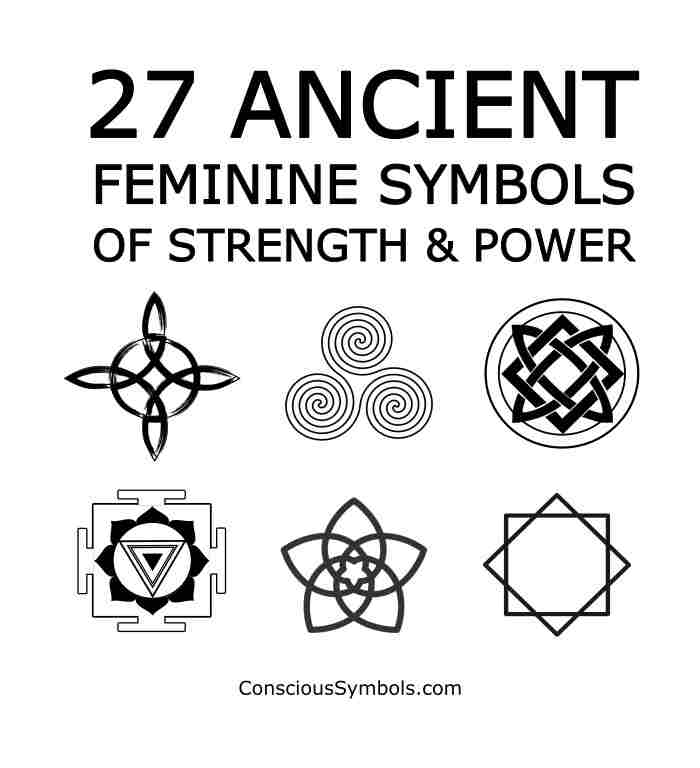
For thousands of years, cultures across the world have used sacred symbols to express the strength, wisdom, and transformative power of the feminine.
This article is a collection of 27 of the most powerful feminine symbols of strength and power.
Whether you’re searching for a meaningful tattoo, a personal emblem, or a deeper connection to feminine energy, these timeless symbols carry profound meanings that have inspired women across cultures and generations.
27 Feminine Symbols of Strength
1. Triple Goddess or Triquetra
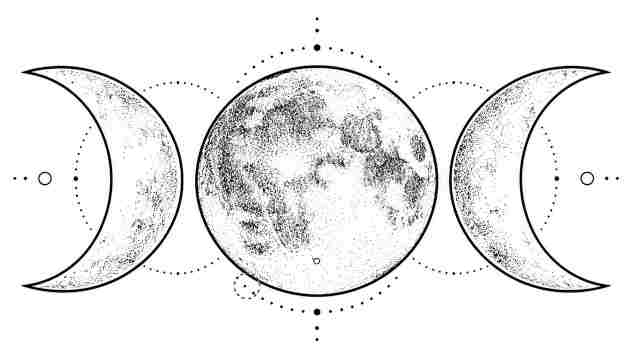
The Triple Goddess is an ancient Pagan symbol that represents the different phases of feminine strength and wisdom. Depicted as a waxing moon, full moon, and waning moon, it reflects the stages of growth, creation, and wisdom.
Its three aspects are:
- Maiden (waxing moon) – Youth, independence, curiosity, and potential.
- Mother (full moon) – Creation, nurturing, compassion, and strength.
- Crone (waning moon) – Wisdom, intuition, transformation, and spiritual insight.
Together, they show that feminine power is not limited to youth but evolves and deepens through every stage of life.
Interestingly, triple-goddess figures appear in many ancient cultures. In Greek mythology, Persephone, Demeter, and Hecate represent the Maiden, Mother, and Crone. In Celtic tradition, you have the triple goddess Morrígan, whose name is translated as ‘Great Queen’. In Hinduism, the goddesses Saraswati, Lakshmi, and Parvati are viewed as a sacred triad representing wisdom, prosperity, and divine power.
2. Lotus
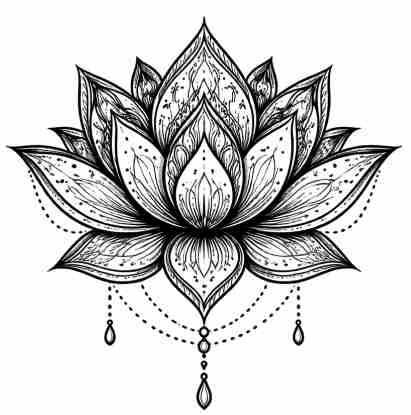
There is something remarkable about the lotus flower. The lotus begins its life in muddy water. Yet instead of being held back by its surroundings, it rises above them and blooms into a flower of extraordinary beauty.
Even more fascinating, lotus leaves possess a natural self-cleaning ability. Water rolls off their surface, carrying away dirt and impurities, allowing the plant to remain clean despite growing in muddy conditions.
For this reason, the lotus has become a powerful symbol of feminine strength, resilience, spiritual awakening, and the ability to transform adversity into wisdom and growth.
It is no wonder that the lotus appears as a sacred symbol in ancient Egyptian, Hindu, Buddhist, and East Asian traditions, despite these cultures developing independently.
3. Gaia (Goddess of Earth)
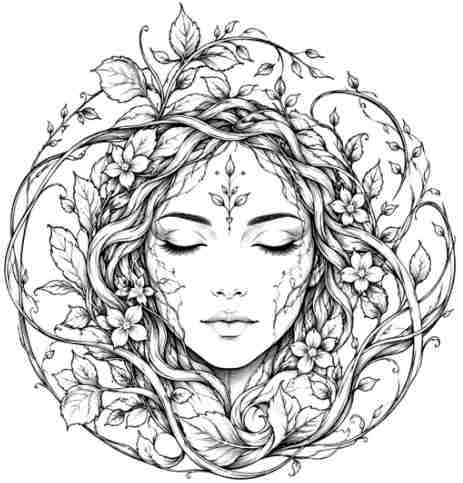
In Greek mythology, Gaia was not merely a goddess of the Earth, she was the Earth itself. She emerged at the dawn of creation and became the source from which gods, mountains, seas, and countless forms of life were born.
Because of this, Gaia is known as the Great Mother. She symbolizes creation, nurturing, abundance, and the feminine power that gives rise to life itself.
More than a deity, Gaia represents the idea that all living things are deeply connected and sustained by the same life-giving force.
4. Runes (Sacred Alphabets)
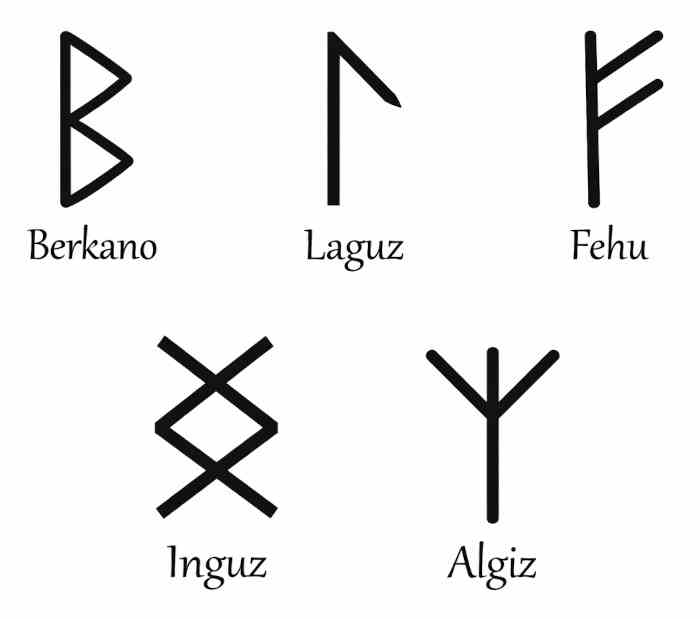
Runes are ancient symbols from the Norse and Germanic traditions that served as both an alphabet and sacred signs. They are believed to carry spiritual power.
Several runes are associated with feminine strength, intuition, creativity, and protection. Some of the most prominent are:
- Berkano – Associated with the birch tree and the birch goddess, it represents growth, renewal, fertility, and nurturing strength.
- Inguz – Associated with the god Ing (or Freyr), a deity of fertility and abundance, it represents fertility, creative potential, new beginnings, and inner growth.
- Algiz – Associated with the elk and its protective antlers, it represents protection, spiritual awareness, and sacred connection.
- Laguz – Associated with water, lakes, and the flowing currents of nature, it represents intuition, emotional depth, adaptability, and transformation.
- Fehu – Associated with the goddess Freyja and with cattle, a traditional symbol of wealth and abundance, it represents prosperity, passion, abundance, and creative energy.
- Perthro – Associated with fate, divination, and the Norns (the three powerful goddesses of destiny). It represents mystery, hidden knowledge, and the unfolding of destiny.
If you are drawn to them, you can meditate on these runes, wear them as jewelry, draw them in a journal, or keep them in your space as reminders of your inner strength, intuition, and creative power.
5. Bind Runes that Represent Feminine Strength
A bind rune is a single symbol created by combining two or more runes. This is done to unite their meanings and create a symbol that represents a specific intention, quality, or purpose.
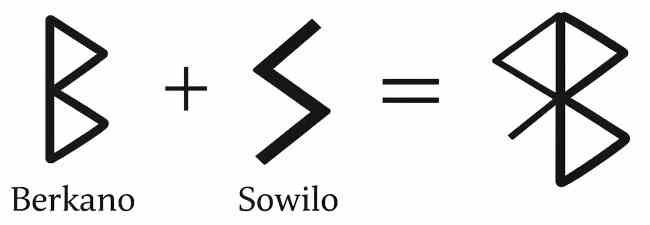
Here are a few examples of bind runes associated with feminine strength and power.
1. Berkano (ᛒ) + Sowilo (ᛊ): Berkano is associated with the birch tree and represents growth, renewal, nurturing strength, and feminine energy. Sowilo represents the sun, vitality, and personal power. Together, they symbolize feminine strength, confidence, resilience, and the power to overcome challenges.
2. Berkano (ᛒ) + Uruz (ᚢ): This bide rune combines the nurturing, life-giving energy of Berkano with the raw strength of Uruz, the wild ox. Together, they symbolize feminine strength supported by resilience, determination, and inner power.
3. Laguz (ᛚ) + Tiwaz (ᛏ): Laguz represents intuition, emotional depth, and feminine energy, while Tiwaz, associated with the god Tyr, represents courage, honor, justice, and determination. Together, they symbolize the balance of intuition and strength, helping you trust your inner wisdom while taking decisive action.
You can also create your own bind rune by selecting runes that match your intention and combining their shapes into a single symbol while focusing on the strength you wish to cultivate.
6. Spiral Goddess
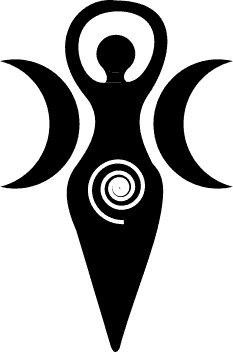
The Spiral Goddess is a modern Pagan and Wiccan symbol derived from the Triple Goddess (that we saw earlier). It combines the feminine form with a spiral, an ancient symbol of creation, growth, and spiritual evolution.
The spiral represents the connection between the spiritual and physical realms. It also represents the flow of creative energy from the spiritual world into the material world.
Because of this, the Spiral Goddess symbolizes creativity, fertility, transformation, and the life-giving power associated with the womb and sacral chakra.
7. Rose of Venus (Pentagram)
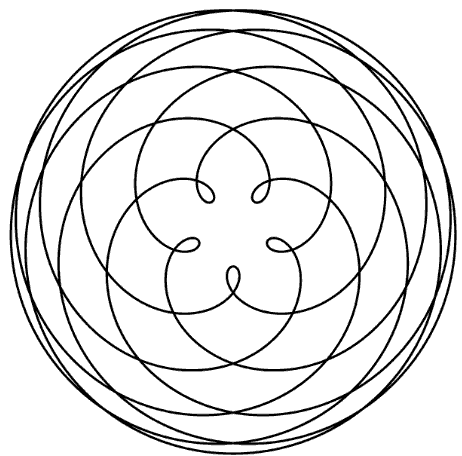
There is something fascinating about the planet Venus. As it moves through the sky relative to Earth, it creates a geometric pattern. Over an eight-year cycle, this pattern forms a five-pointed star (pentagram), called the Rose of Venus.
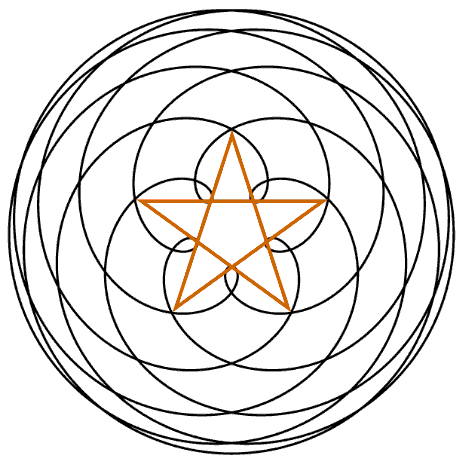
Ancient cultures associated Venus with feminine energy and linked it to goddesses such as Aphrodite, Ishtar, and Inanna. These goddesses represented beauty, love, fertility, and creative power. Because of this, the Rose of Venus came to symbolize balance, harmony, and the creative strength of the feminine.
You can meditate on this symbol, wear it as jewelry, or keep it in your space as a reminder of the beauty, creativity, and intuitive wisdom associated with Venus.
8. The Star of Lada
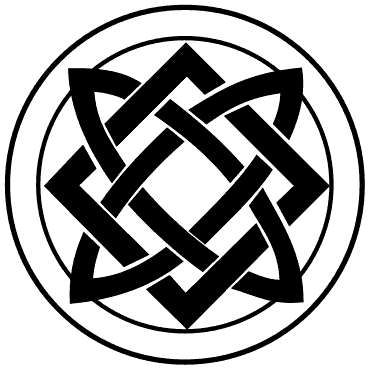
The Star of Lada comes from ancient Slavic mythology and is associated with Lada, the goddess of love, fertility, family, and protection. She was revered as a protector of women, motherhood, and the balance of life.
The symbol appears as an eight-pointed star, with its intersecting lines representing protection, feminine strength, nurturing energy, and creative power.
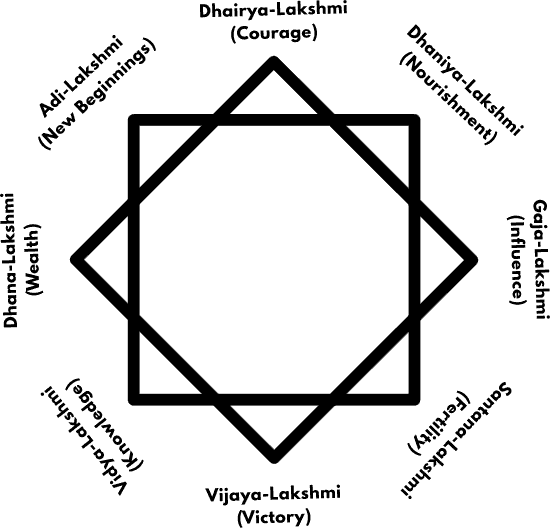
The Star of Lakshmi is a sacred Hindu symbol associated with Goddess Lakshmi, the deity of wealth and prosperity. It is formed by two overlapping squares, creating an eight-pointed star.
Its eight points represent the eight forms of Lakshmi, each symbolizing a different type of wealth and blessing:
- Adi Lakshmi – New beginnings and spiritual wealth.
- Dhairya Lakshmi – Courage, strength, and perseverance.
- Dhanya Lakshmi – Food, nourishment, and abundance.
- Gaja Lakshmi – Power, influence, and prosperity.
- Santana Lakshmi – Fertility, family, and wellbeing.
- Vijaya Lakshmi – Victory and success.
- Vidya Lakshmi – Knowledge, wisdom, and learning.
- Dhana Lakshmi – Material wealth and prosperity.
This makes the Star of Lakshmi a powerful symbol of feminine strength, prosperity, wisdom, and nurturing energy.
Interestingly, this symbol closely resembles the Star of Lada from Slavic tradition (that we saw earlier).
10. Tri-Shakti
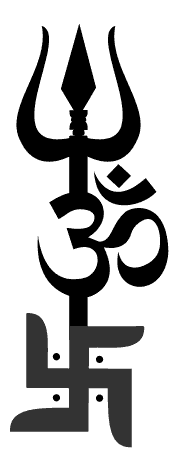
Tri-Shakti, which translates to “Three Powers” in Sanskrit, is a sacred Hindu symbol representing the combined energies of three goddesses: Durga (or Parvati), the goddess of power; Saraswati, the goddess of knowledge; and Lakshmi, the goddess of wealth and prosperity.
The symbol combines three auspicious elements: the Om, the Trishul (trident), and the Swastika.
- Om, associated with Saraswati, represents the first sound from which the universe emerged.
- The Trishul, associated with Parvati, represents strength and transformation.
- The Swastika, associated with Lakshmi, symbolizes prosperity, harmony, good fortune, and the material world. It is also linked to the four directions and the balance of the natural elements.
Together, these elements represent the union of knowledge, power, and prosperity, making Tri-Shakti a powerful symbol of feminine energy and divine strength.
11. Hecate’s Wheel
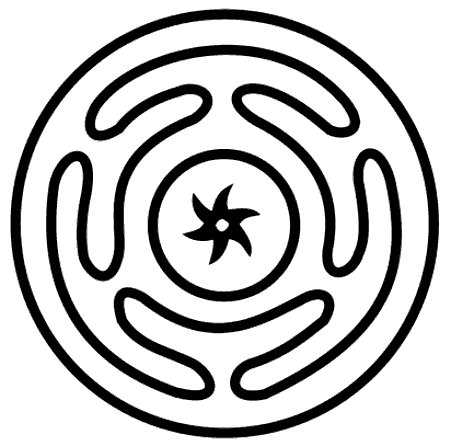
Hecate’s Wheel, also known as the Strophalos, is an ancient Greek symbol associated with the goddess Hecate.
Hecate was linked to magic, wisdom, crossroads, and the moon. She was also viewed as a triple goddess, with influence over the earth, sea, and sky, and was seen as a guide through times of change and uncertainty.
Like the triple moon symbol we saw earlier, Hecate’s Wheel represents the three aspects of feminine power. It encourages you to trust your inner guidance, embrace transformation, and move through the unknown with confidence.
12. Star of Ishtar
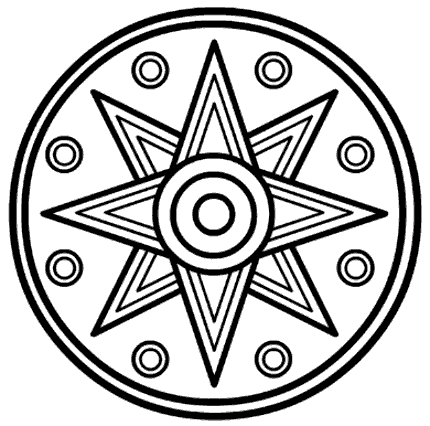
The Star of Ishtar is an ancient Mesopotamian symbol associated with Inanna/Ishtar, the goddess of love, fertility, beauty, and war. She symbolized both the nurturing and fierce aspects of divine feminine energy.
The symbol appears as an eight-pointed star and is closely connected to the planet Venus, which was sacred to Ishtar. Venus takes approximately eight years to return to the same position relative to Earth, and the star is believed to reflect this celestial cycle.
Because Venus appears as both the morning star and the evening star, the symbol also represents duality, such as the nurturing and fierce aspects of femininity.
As a symbol of feminine strength, the Star of Ishtar reminds you to embrace your creativity, compassion, and intuition while also recognizing the courage, determination, and raw feminine power within you.
13. Phoenix Rising
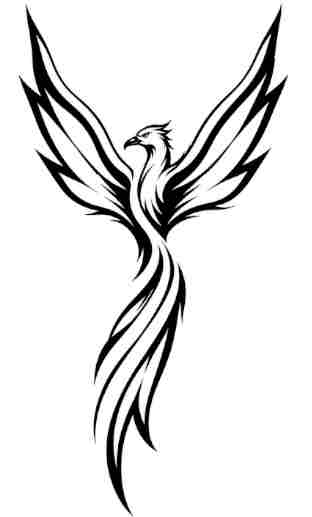
The Phoenix, whose name means “firebird” in Greek, is a mythical bird said to rise from its own ashes after perishing.
Because of this extraordinary cycle, the Phoenix has become a powerful symbol of rebirth, renewal, resilience, healing, and the ability to emerge stronger after adversity.
It reminds you to release the past, let go of limiting beliefs, and continue growing into your fullest potential.
14. Lioness
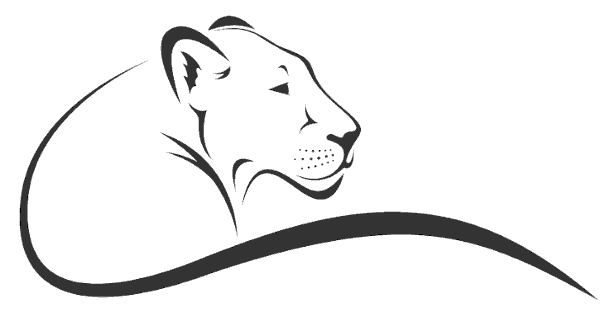
Few animals symbolize feminine strength as powerfully as the lioness. Because lionesses live and work together within a pride, they are also seen as symbols of sisterhood, cooperation, and feminine power.
What makes the lioness especially unique is that she does most of the hunting for the pride, working in coordinated teams to bring down prey much larger than herself. Lionesses also fiercely protect their cubs and will risk their lives to defend their family and territory.
For these reasons, the lioness has become a powerful symbol of strength, resilience, leadership, protection, and the fierce yet nurturing nature of feminine energy.
15. Fern
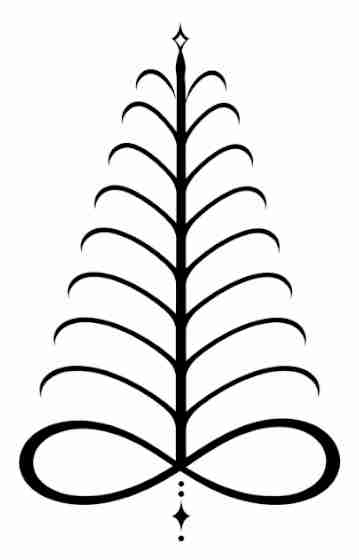
The symbol shown above is an Adinkra symbol known as Aya, which depicts a fern. Because ferns can grow in harsh conditions and thrive where many other plants cannot, they have come to symbolize endurance, self-reliance, and the ability to overcome challenges.
Interestingly, new fern leaves begin as tightly curled spirals and slowly unfurl over time. For this reason, the fern is also seen as a symbol of patience and personal growth, reminding you that strength, confidence, and wisdom are built through persistence and experience rather than appearing all at once.
16. Asase Ye Duru
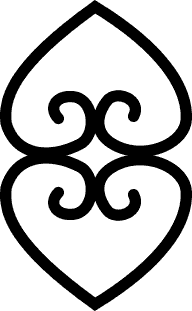
Asase Ye Duru, which translates to “The Earth Has Weight,” is an African Adinkra symbol that represents the divinity and sacredness of Mother Earth.
The symbol is associated with feminine energy, protection, sustenance, abundance, power, and providence. It serves as a reminder that the Earth supports and nourishes all life, reflecting the nurturing, life-giving, and protective qualities associated with the feminine.
17. Dara Knot
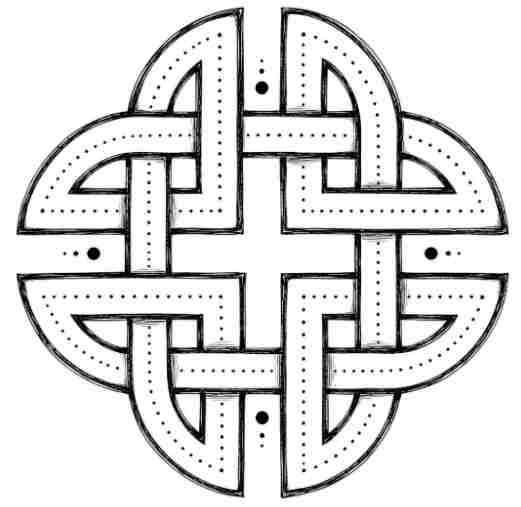
The Dara Knot is an ancient Celtic symbol inspired by the intricate root system of the oak tree. Its name comes from the Irish word Doire (pronounced DOR-eh), meaning “oak.” In Celtic tradition, the oak was considered a sacred tree and was revered for its strength, wisdom, and longevity.
Because its roots remain firmly grounded even during storms, the Dara Knot symbolizes inner strength, resilience, stability, and endurance. This symbol also reflects the ability to remain rooted, nurturing, and strong through life’s challenges.
18. Mara’s Cross
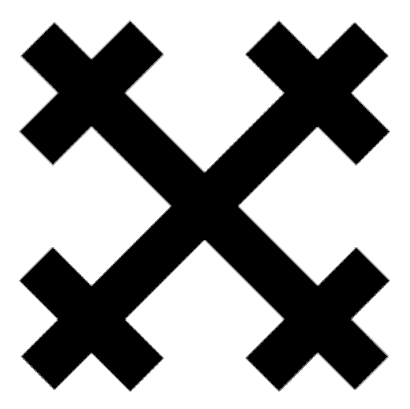
Māra’s Cross is an ancient Latvian symbol associated with Māra, one of the most important goddesses in Baltic mythology. She was revered as the guardian of the earth, nature, women, childbirth, and the material world, and was closely connected with nourishment, protection, and everyday life.
Primarily, Māra’s Cross represents the nurturing and grounding force of the Earth and its life-sustaining energy. It symbolizes protection, strength, stability, abundance, and the feminine power that supports, nourishes, and sustains all living things.
19. Witch’s Knot (Celtic Goddess Knot)
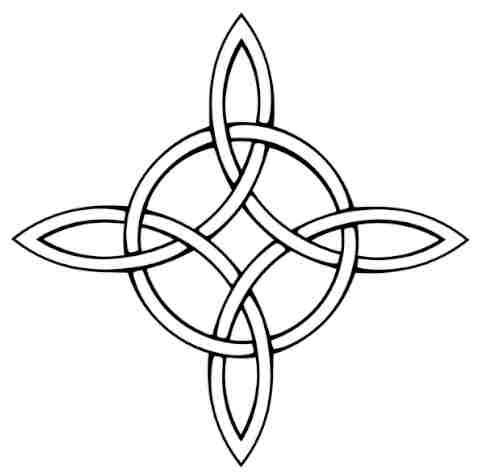
The Witch’s Knot, also known as the Celtic Goddess Knot, is a symbol associated with protection, magic, and feminine strength. Its four arcs represent the four elements and four directions, reflecting harmony with the forces of nature.
The symbol is closely linked to knot magic, an ancient practice in which knots were believed to hold intentions, prayers, or protective energies. In many traditions, knots were tied around the wrist or worn as charms to ward off negative influences.
Because the Witch’s Knot is drawn with a single continuous line, it also symbolizes unbroken protection, interconnectedness, and the continuous flow of feminine energy.
20. Athena
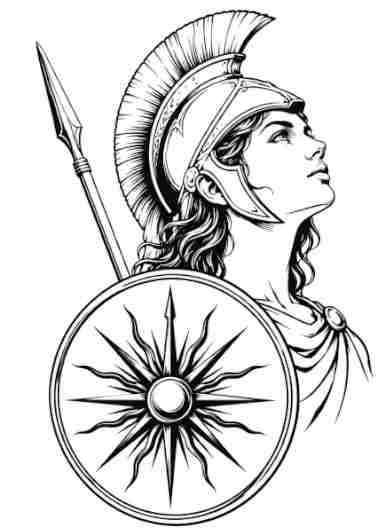
As the Greek goddess of wisdom and war, Athena is a powerful symbol of feminine strength. While many gods were known for their physical power, Athena was respected for her wisdom, clear thinking, and good judgment.
In one myth, Athena stopped Hercules from harming others during a fit of madness by knocking him unconscious with a stone. This story shows that true strength is not only about force, but also about wisdom, self-control, and knowing when to act.
Because of this, Athena has become a symbol of courage, intelligence, leadership, and the balance between strength and wisdom.
21. Goddess Durga
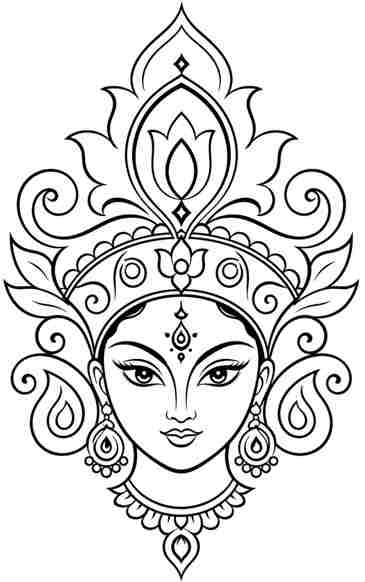
In Hindu tradition, Durga is revered as a powerful protector who destroys evil and defends righteousness. In fact, the Sanskrit word Durga means “the invincible one” or “she who is impossible to defeat.”
Durga is depicted with multiple arms holding sacred weapons, symbolizing her ability to protect righteousness and restore balance. Because of this, she represents the fierce and protective aspect of feminine power.
Two symbols are especially associated with her:
Durga’s Trident (Trishula) – Represents divine power, protection, and the ability to overcome negative forces.
Durga Riding a Tiger – Symbolizes courage, strength, determination, and mastery over fear.
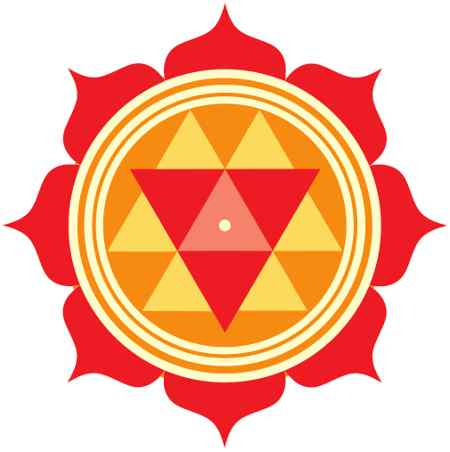
Her energy is often invoked through the Durga Yantra (as shown in the image above), a sacred geometric symbol used in meditation and spiritual practice.
26. Oysters
Oysters symbolize, protection, strength, fertility, femininity and prosperity. An Oyster serves as a constant reminder that the obstacles you face today are only temporary and will always lead to something phenomenally beautiful.
27. Sea Shells
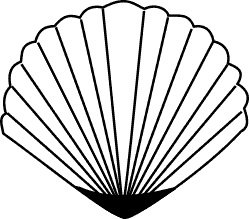
Seashells have long been recognized as symbols of the divine feminine. Their ability to protect and nurture the delicate life they contain reflects the balance of strength and care associated with feminine energy.
For this reason, they have become symbols of fertility, creation, protection, and the nurturing forces of nature.
How Can You Use These Symbols to Cultivate Strength?
1. Wear Them or Display Them in Your Space
If a particular symbol resonates with you, consider using it into your daily life through jewelry, artwork, tattoos, or home décor.
For example, if you’re working on courage and healthy boundaries, you might place an image or statue of Durga in your living space.
Regular exposure to a symbol can serve as a powerful reminder of the qualities it represents and help reinforce those traits within yourself.
2. Meditate on Their Meaning
Spend a few moments reflecting on a symbol and what it represents. You don’t need to stare at the symbol throughout your meditation; simply bring its meaning to mind and contemplate how its qualities apply to your life.
Over time, this practice can help deepen your connection to the strength, wisdom, or energy the symbol embodies.
3. Work with Them During Receptive States
Symbols can have a greater impact when your mind is naturally more receptive. Consider reflecting on them shortly before falling asleep or soon after waking up, when the subconscious mind is more open.
Emotional moments can also create heightened receptivity.
As you focus on a symbol, consciously associate it with empowering thoughts, intentions, and qualities you wish to cultivate. The more meaning and intention you invest in it, the more powerful it can become as a personal reminder of your inner strength.
Conclusion
The symbols in this collection are more than decorative designs. They are reminders of the many forms that feminine strength can take. Each one carries a lesson about courage, intuition, creation, resilience, or transformation.
By engaging with these symbols intentionally, you can draw inspiration from the wisdom they represent and cultivate those same qualities within your own life.